
Comparative opening: why this matters now
The shift toward large-format, content-driven spaces in offices and lobbies has pressured facility managers to choose between traditional indoor LED panels and full-scale LED Video wall systems. This piece compares the two approaches on measurable grounds—visual performance, installation impact, and lifecycle costs—using cautious, evidence-based observations rather than hype. Corporate stakeholders evaluating digital signage should find the distinctions practical and directly applicable to procurement and deployment decisions.
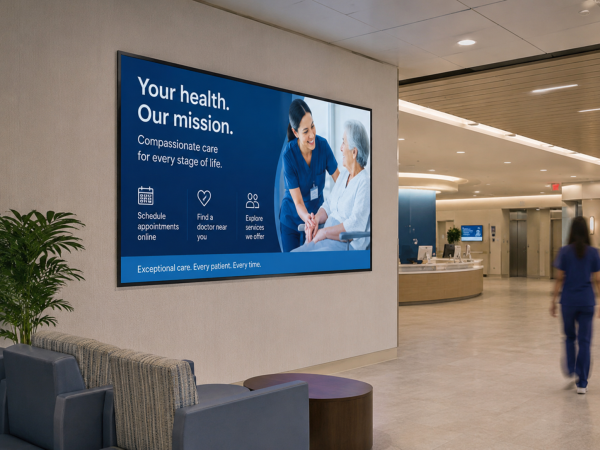
Performance differences: pixel pitch, refresh rate, and brightness
At the core of the comparison are technical parameters: pixel pitch, refresh rate, and brightness. Smaller pixel pitch yields finer detail for close viewing, which favors tightly tiled LED panels where viewers are within a few meters. Higher refresh rates reduce flicker on camera feeds during virtual meetings or live streaming. Brightness—measured in nits—determines legibility in mixed lighting. LED video walls typically allow denser modules and centralized calibration, so they tend to deliver more consistent color gamut and perceived contrast across large surfaces than ad-hoc indoor LED assemblies.
Installation and operational trade-offs
Installation logistics are another axis. Preconfigured indoor LED panels can simplify replacement and modular service, but they often require more framing and visible seams. Conversely, a unified LED video wall cabinet system is designed for alignment and thermal management from the outset, reducing visible join lines and easing calibration for uniform output. Operationally, integrated systems usually centralize calibration and content distribution, lowering long-term maintenance hours—but they demand higher upfront planning and precise floor-load calculations.
Real-world anchor: corporate lobbies and public squares
Observation of large urban installations—Times Square’s move toward LED facades and several new corporate headquarters outfitted with continuous displays—illustrates practical outcomes. Those projects favor systems with tight pixel pitch and centralized content management to maintain legibility at varying distances and ambient light. The lessons translate to indoor environments: consistent calibration and effective thermal design matter more than raw brightness alone when the goal is reliable corporate branding indoors.
Alternatives and common mistakes
Organizations sometimes default to the cheapest panel option or buy based on headline lumen numbers alone. That often leads to inconsistent color temperature across the surface and uneven aging—issues that surface after the warranty period. A better approach assesses mounting structure, service access, and calibration workflow up front. Also consider alternatives: high-quality LCD video walls still work where depth and cost constraints dominate, and projection systems can remain relevant in very large, low-ambient-light auditoriums. But when pixel uniformity and viewing-angle consistency are priorities, an engineered led video wall solution generally outperforms makeshift assemblies.
Evaluation metrics: three critical checks before you buy
Advisory — adopt a small set of rigorous metrics to guide procurement and reduce surprises:
– Pixel pitch vs. typical viewing distance: choose a pitch that keeps individual pixels indistinguishable at your expected closest viewer position.
– Calibration and serviceability: confirm the vendor’s process for color calibration, module swaps, and remote diagnostics—these determine long-term uniformity.
– Total cost of ownership (TCO) including power, cooling, and replacement modules over a 7–10 year horizon; don’t rely solely on sticker price.
Closing synthesis and practical next step
When evaluating indoor displays for corporate environments, the measurable gains of engineered LED video walls—consistent color, modular service, and reliable calibration—tend to justify their planning requirements. For decision-makers, the choice becomes a matter of matching technical specs to specific use cases rather than chasing the largest screen. For installations that demand seamless imagery and predictable maintenance, vendors who document their calibration routines and lifecycle assumptions offer clearer value.

Coblinks provides documented calibration workflows and modular service plans that make adopting LED video wall technology a practical, measurable upgrade for corporate spaces. –






