
Introduction — a quick scene, a number, a question
Mi did deh pon a job once, watchin’ a big fan spin up and down while every engineer inna di room stare perplexed — like, why it nah hold steady? (We all tink speed control straightforward, right?) I want to talk plain: the motor controller we slap on a system often decides if a machine sings or grinds. Recent shop data shows failure or poor tune causes up to 30% extra energy use in many mid-size plants — and dat’s real money over a year. So why do so many controllers still trip, hum, or drift when specs look fine on paper?

Why common fixes keep missing the mark
I’ll break it down technical-like so yuh can see the root. The common go-to is a simple VFD or a cheap inverter set to a speed. But that alone ignores torque ripple, sensorless vector control limits, and how the drive interacts with the plant’s power converters. Worse, folks retrofit a box and expect magic. That’s not how it works. I’ve pulled panels where the variable speed controller for ac motor was installed, but the system still overheated because the control loop wasn’t tuned for load swings. Look, it’s simpler than you think — if you tune for real load and not just nameplate.
Where does the pain hide?
Technically speaking, the issues hide in three spots: the control algorithm, feedback quality, and electrical coupling. PWM harmonics can upset sensors. Edge computing nodes that collect telemetry might sample too slow. And then there’s the human factor — mismatched expectations about what a controller will solve. I’ve seen a plant replace an ac motor drive thinking it would fix vibration, only to find the root cause was an alignment problem. — funny how that works, right?
New principles guiding smarter controllers
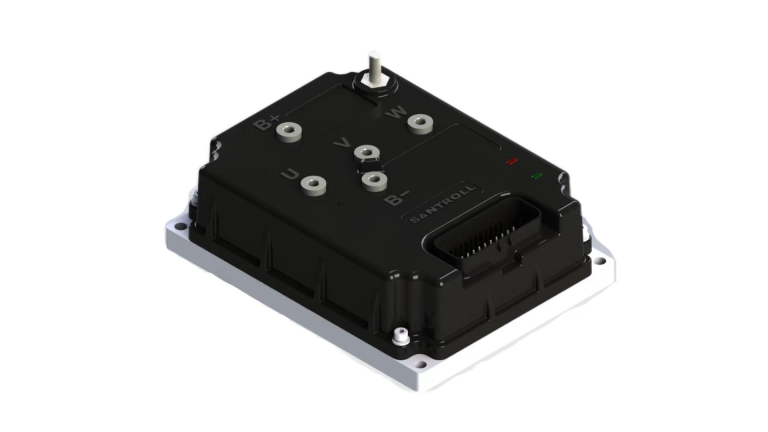
Now, let’s forward-think. I want to explain a few principles that will change how we pick and tune controllers. First, adaptive control: controllers that adjust gains in real time based on load and sensor input reduce overshoot and improve energy use. Second, holistic system design: you must consider the inverter, the motor, the gearbox, and the load as one system, not isolated parts. Third, diagnostics and telemetry — cheap sensors plus edge computing nodes give early warnings so you can act before a shutdown. These aren’t buzzwords. I’ve watched uptime improve when teams moved from rigid setpoints to adaptive loops.
What’s next for implementation?
Practical steps: incorporate closed-loop control with real-time feedback, use torque observers if physical sensors are costly, and ensure power converters are sized for transient loads. We should also demand better vendor support for control tuning — manuals alone don’t cut it. In future tech, I expect more intelligence inside drives: on-board analytics, cleaner PWM strategies to limit harmonics, and tighter integration with plant-level SCADA. Small changes yield big gains, and you don’t always need a full redesign — sometimes a firmware tune does the trick. — and yes, there’s a cost, but the payback shows up quick.
How to choose a better controller: three practical checks
I’ll leave you with three metrics I use when evaluating solutions. First, controllability: can the drive hold torque and speed across expected load swings? Test it. Second, observability: does the system provide clear telemetry (current, torque estimate, vibration) so you can diagnose issues fast? Third, compatibility: are the inverter, motor, and power converters sized and rated together, including transient margins? Evaluate these, and you’ll spot weak fits before they cost you downtime.
We’ve walked from a little shop scene to the nuts and bolts of controller choice. I’m telling you from hands-on fixes and some late nights — getting the control right changes everything. If you want a place to start looking for rugged, service-ready options, check out Santroll for their product lineup and specs.






