Problem first — what keeps you up at night
You’ve got tight routes, worried parents, and drivers juggling kids and traffic. When something goes wrong, the story splits three ways and no one wins. A reliable AI dashcam stops finger-pointing fast by putting objective footage on the table. That’s the kind of tool that turns confusion into answers, and answers into safer decisions.
Hard truth: the three things that break most implementations
– Expect weak planning: no one maps who owns what data or who responds to incidents.
– Expect messy installs: cheap mounts, loose wiring, dead batteries show up on day one.
– Expect policy gaps: no one trains drivers or parents on footage use, and privacy becomes a nightmare.
Fix those three and you halve your headaches.
Checklist: Planning and policy — get this written now
– Define goals: safety review, incident evidence, driver coaching — say which and why.
– Ownership: who stores footage, retention length, who can pull clips, how requests are logged.
– Privacy rules: camera-facing rules, student privacy protections, parent notice language and consent where required.
– Incident workflow: who views video, how quickly clips are exported, and escalation steps for crashes or claims.
Write these down and share them with drivers and legal.
Hardware picks: what actually lasts on a school bus
– Rugged camera bodies with wide dynamic range. You want clear daytime and usable night footage.
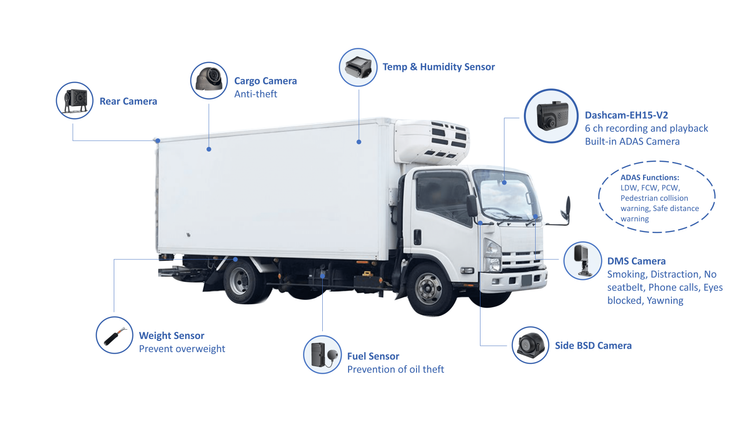
– Dual-channel setups for road and cabin views when you need both perspectives.
– Proper mounting and vibration isolation. A loose mount delivers garbage footage fast.
When you shop, look at proven commercial dash cam models that supply secure storage and tamper-evident features — not the cheapest dashcams off a general site. A decent commercial dash cam will save you money later.
Installation and wiring — common mistakes to avoid
– Don’t tap accessory power without a fuse and documentation.
– Run cables away from heat and moving parts. Use clips, not glue.
– Test for boot-up and shutdown behavior with your ignition cycle. Cameras that stay on drain batteries and wreck weekend starts.
Have a certified installer hand you a checklist after each bus. You want repeatability.
Data, storage, and network — practical rules, not theory
– Decide local vs cloud: local NVMe/SSD is fast for incident export; cloud helps fleet-wide analytics.
– Retention rules: keep routine footage short (7–30 days), preserve incident clips longer per policy.
– Chain of custody: timestamped, checksum-verified exports with an audit log. No one can argue footage if the export trail is clean.
Keep the system simple so fleet staff actually follow it.
Driver training and change management
– Run short hands-on sessions: how the camera works, where footage goes, and why it protects them.
– Role-play incident reporting. Drivers who know what to do give better testimonies and safer follow-up.
– Maintenance routine: daily glance, weekly function check, monthly firmware audit. Make it part of pre-trip checks.
People follow systems that are easy and fair.
Maintenance, support, and warranty realities
– Budget for spare parts and periodic replacements — cameras don’t last forever in diesel heat.
– Plan for firmware updates; out-of-date software becomes a security hole.
– Have a support SLA with a vendor or integrator so you’re not waiting days for a critical export.
Record who fixed what and when. That log saves time when disputes hit.
Common pitfalls and how to dodge them
– Pitfall: keeping everything forever. Solution: enforce retention and delete schedules.
– Pitfall: unclear incident ownership. Solution: assign a single point who leads investigations.
– Pitfall: bad mounts. Solution: spec and require vendor-approved hardware and documented installation.
Avoiding these stops most post-deploy headaches.
Alternatives and quick comparisons
– Basic dash cams: cheap, quick installs, limited evidence value.
– Fleet-grade systems: higher upfront, secure exports, integrated telematics and driver coaching.
– Third-party managed services: let an expert handle storage and compliance, at an ongoing cost.
Pick based on how much you want to own the process versus outsource it.
Why video matters — the proof people use
Investigators and fleet managers rely on recorded footage to reconstruct events; organizations like NHTSA routinely reference video evidence in post-incident reviews. That’s the practical clout footage brings: clarity, faster claims resolution, and better training material.
Wrap-up — a short, honest plan you can act on
Start by writing a firm policy, pick rugged hardware, use proper installs, and train drivers. Keep data rules clear, maintain equipment, and designate a single incident lead. Do those things and you’ll cut dispute time and raise safety. For fleets moving from talk to action, vendor partners who understand bus routes and tech give you real results — consider practical integrations from BSJ as part of that roadmap.