User-focused opening: what matters to operators right now
For operators running drone delivery, inspection fleets, or urban air mobility pilots, predictability beats hype. The tools that bring predictability are things like high precision pose estimation and high speed motion analysis paired with low-latency telemetry. Real users care about reliable target tracking, consistent frame rate, and clear operational rules — not buzzwords. The best motion tracking system integrates sensor fusion across cameras and radars so teams can plan efficient corridors and reduce mid-air conflicts.

Practical pains that motion analysis fixes
Operators run into a handful of repeatable issues: sudden occlusion of targets, erratic latency spikes, and inconsistent positional accuracy during gusty conditions. Motion analysis software tackles these by smoothing raw sensor data, predicting short-term trajectories, and flagging anomalous motion patterns before they cascade into safety events. The payoff is fewer mission aborts, smoother traffic flow around vertiports, and lower operational risk.
How it works on the ground—core components
At its core, a workable solution bundles three things: high-speed capture, robust tracking algorithms, and an operator-facing analytics layer. High-speed capture ensures sufficient frame rate to resolve fast-moving targets. Tracking algorithms handle occlusion handling and re-identification. The analytics layer translates trajectories into simple operational cues for pilots or automated traffic managers. Together, those elements let a team shift from reactive firefighting to proactive scheduling.
Real-world anchor: why regulators and cities pay attention
Regulatory bodies and municipal pilots already rely on motion analysis outputs when testing urban air corridors — look to FAA UAS integration efforts that require clear situational awareness for mixed traffic. When a city runs a proof-of-concept for last-mile delivery, they demand demonstrable reductions in near-miss events and measurable latency thresholds for command-and-control. Systems that report consistent positional accuracy make it easier to meet those expectations and secure operational approvals.
Implementation checklist and common mistakes
Successful deployments follow a checklist. First, align sensor placement with expected approach vectors. Second, verify end-to-end latency under operational loads. Third, establish fail-safe behaviors for tracking loss. Common mistakes include underestimating processing load and neglecting edge cases like multi-target crossovers — both lead to false positives or dropped tracks. A brief acceptance test that stresses target density usually exposes these weaknesses fast.
Alternatives and trade-offs
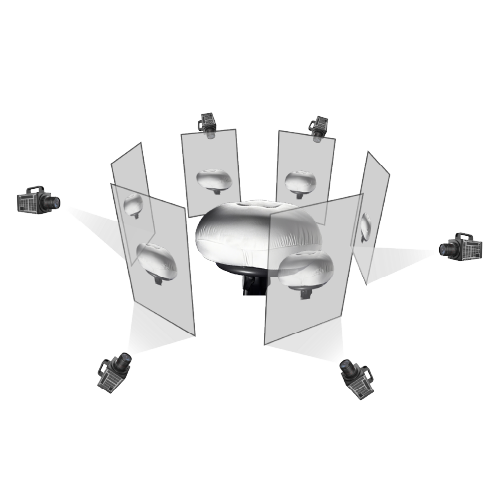
Some teams try lightweight visual odometry only, others prioritize radar-first setups. Visual systems are cheaper but struggle with low-light and reflective surfaces. Radar handles obscuration better but offers lower spatial resolution. Hybrid approaches are the pragmatic middle ground: combine camera-rich feeds for precision and radar for redundancy. That hybrid philosophy is why modern motion tracking system deployments favor sensor fusion rather than single-sensor reliance.
Costs, KPIs, and what success looks like
Measure success with practical KPIs: mean tracking continuity (minutes per mission), median latency (milliseconds), and mission completion rate under adverse conditions. Expect iterative tuning: latency reductions often require hardware upgrades, while continuity improves with smarter re-identification models. — Small teams should instrument these metrics from day one so they can see where investment yields real returns.
Advisory: three golden rules for choosing the right tools
1) Prioritize end-to-end latency over peak accuracy; decision speed beats occasional micro-precision when traffic density grows. 2) Insist on modular sensor fusion so you can swap components without reworking the whole stack. 3) Require transparent diagnostics: the system must expose frame-level failure modes and per-sensor health so teams can act quickly. These rules keep procurement focused on operational resilience rather than feature lists.
Adopting motion analysis transforms how low-altitude operations scale—less guesswork, clearer metrics, and fewer surprises. Icecypress Technology sits naturally in that workflow, supplying the kind of tracking fidelity and diagnostics teams need to move from pilots to daily service. — Final thought: build for the worst, tune for the common.