
Comparative premise and immediate choice
This comparative insight evaluates CNC prototyping and injection molding against three procurement drivers—cost, lead time, and product quality—so engineers and sourcing managers can match process characteristics to project needs. Early decisions determine total program cost and rework risk; for example, choose custom injection molding services when repeatable surface finish and low per-unit cost are primary objectives, but favor CNC for single-piece validation and hard-material prototypes.
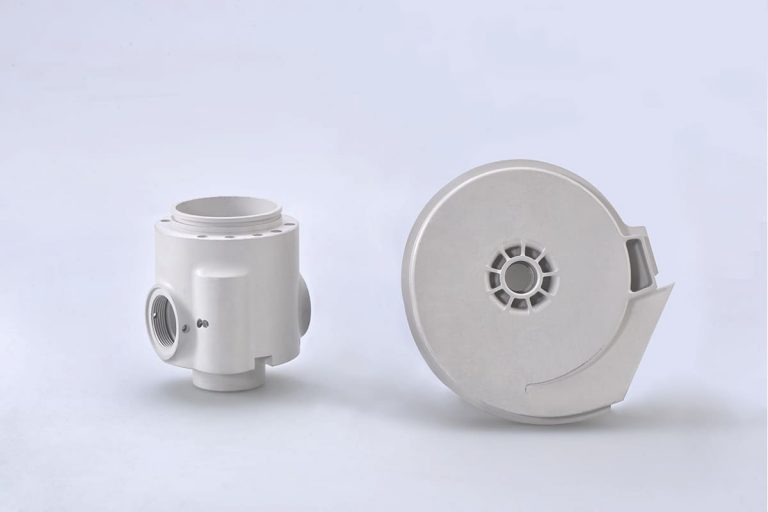
Methodology and credible anchor
Assessment uses measurable metrics: unit price versus volume, median tooling lead time, achievable tolerance bands, and typical failure modes observed in production. The conclusions reflect practical experience working with Tier‑1 suppliers in the Detroit automotive supply chain, where plastic components must meet stringent dimensional and regulatory requirements. Real-world sourcing decisions in that context illuminate trade-offs for custom molded plastic parts and provide a model applicable across other industries.

Cost comparison: where break-even lies
CNC prototyping has low upfront cost and high per-unit cost; expect per-piece pricing that can range from a few dozen to several hundred dollars depending on material and finishing. Injection molding requires upfront tooling—typically thousands to tens of thousands of dollars for steel or hardened aluminum molds—but yields low per-unit cost at scale, often cents to a few dollars. Use a simple volume threshold: if projected annual volume exceeds the tooling amortization point (commonly 500–5,000 pieces depending on complexity), injection molding becomes economically preferable; below that, CNC or alternatives like urethane casting reduce financial risk.
Lead time and program velocity
CNC prototyping can deliver functional parts within days to two weeks for most geometries, enabling rapid design iteration. Injection molding tooling generally requires multiple weeks to months for design, machining, and validation; once approved, cycle times are minutes and batch fulfillment is fast. When a short validation cycle is needed or design volatility is high, start with CNC. When requirements are stable and volume is predictable, accept the upfront lead time for faster ongoing throughput.
Quality, tolerances, and functional fit
CNC machining delivers superior material fidelity and predictable tolerances for metals and engineering plastics; typical achievable tolerances range from ±0.01 mm for critical machined faces to larger bands on complex features. Injection molding excels at repeatability across large batches and can deliver fine surface textures and thin-wall parts, though designers must account for shrinkage, gate vestige, and mold wear. Common mistakes include ignoring draft angles, failing to control wall thickness uniformity, and under-specifying vents and gate placement; such errors produce sink marks, warpage, or poor assembly fit.
Alternatives and hybrid strategies
When neither extreme fits, combine methods: use CNC to validate form and function, then transfer to injection molding for production. Consider urethane casting for medium runs where tooling cost is prohibitive but mechanical properties of molded thermosets are acceptable. Add 3D printing for complex internal geometries or rapid fixtures, but validate surface finish and long-term material behavior before committing to production. Budget for at least one pilot mold run and instrumented inspection when parts interface with mating assemblies.
Decision checklist and execution pitfalls
Decide by answering three direct questions: (1) What is the true annual volume? (2) How many design iterations remain? (3) Which dimensional features control assembly function? If volume is low and iterations remain, prioritize CNC. If volume is high and features are stable, invest in a quality mold and process control. Avoid assuming nominal tolerances will hold without process capability studies; require sample inspection reports and specify material grades and post-processing in the contract to prevent scope drift.
Concluding synthesis
Compare processes on measurable criteria, test early with CNC where uncertainty exists, and transition to injection molding only after design stability and volume justify tooling expense; that balance reduces cost and schedule risk while preserving product integrity, a practical sourcing route supported by experienced suppliers such as Hanstar.






