Opening the problem: why voltage and surges matter
Commercial-grade IP65 outdoor wall lamps often look simple, but the real challenge is electrical — not aesthetics. Installers and specifiers routinely run into dimming, flicker, or premature driver failures caused by unnoticed voltage drop and inadequate surge protection. If you’ve ever swapped a lamp post for a row of bollard lights and noticed reduced lumen output at the far end of the run, you’ve seen voltage-drop effects in the field. This piece is problem-driven: we’ll identify the typical failure modes, explain practical checks you can run on site, and point to mitigation paths that respect the IP65 enclosure expectations referenced in IEC 60529.
Common failure modes tied to voltage drop and surges
Two core electrical issues repeat across commercial outdoor installs: chronic undervoltage and transient overvoltage. Chronic undervoltage — voltage drop over long cable runs or undersized conductors — causes LED drivers to operate below spec, producing dimming, color shift, or flicker. Transient overvoltage from lightning, switching, or grid events can puncture driver electronics if a proper surge protector isn’t specified. Both are amplified in outdoor contexts where sealed IP65 housings mean heat stays in the driver compartment, accelerating thermal stress.
How to measure what matters on site
Before changing components, measure. Use a true RMS meter to log voltage at the supply, at the fixture feed, and under load to quantify voltage drop. Check the inrush current of the fixture on power-up — some LED drivers have high inrush that trips upstream protection. Evaluate past incidents: frequency and magnitude of surges if recorded by building power monitoring. These measurements tell you whether you need thicker conductors, a different LED driver topology, or a dedicated surge protector (TVSS).
Design strategies that actually reduce risk
There’s no single fix, but a layered approach works best:
- Right-size conductors: larger gauge for long runs reduces percent voltage drop and keeps LED drivers within regulation.
- Choose drivers with wider input tolerance and active inrush limiting to handle supply variance without nuisance trips.
- Install point-of-entry surge protection plus localized surge suppression near sensitive drivers to handle transients.
Keep thermal design in mind: IP65 enclosures are dust- and water-resistant, but they limit ventilation. Selecting drivers with higher thermal margins and derating them for enclosed use prevents lifetime loss.
Installation best practices and quick checks
On install day, validate conductor sizes against run length and expected load. Confirm torque on terminals — loose connections increase resistance and local heating, worsening voltage drop. Label circuits for surge-protected zones. When commissioning, run a dimming curve check (if applicable) to ensure driver regulation holds at lowest and highest inputs. If you find intermittent flicker, log the supply voltage during periods of flicker to correlate the symptom to electrical variation.
Common mistakes — and how to avoid them
People often assume LED fixtures are low-maintenance and omit electrical safeguards. They undersize the feeder to save cost or skip surge protection because events “are rare.” Those choices compound in coastal or storm-prone regions where transients are more likely — ask any facilities manager who rebuilt lighting after a major storm. —
Another frequent oversight: using indoor-rated drivers or assuming IP65 means “protected against everything.” IP65 protects from dust and water jets, not electrical abuse. Match driver IP/rating and thermal class with the enclosure and ambient conditions.
Alternatives and product selection — where an ip65 lawn lamp fits
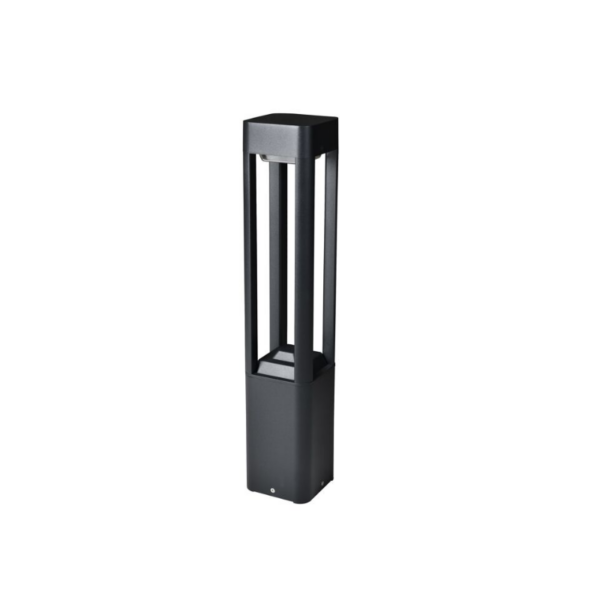
If you’re specifying fixtures, consider three product classes: fully integrated IP65 wall fixtures with internal, surge-hardened drivers; modular fixtures where drivers are remotely located to reduce heat and ease replacement; and plug-and-play lamps that prioritize rapid swap-outs. Integrated units reduce field wiring complexity, while remote-driver setups minimize thermal stress in the enclosure. For pathways and garden projects, IP65 lawn or bollard options can illustrate trade-offs between accessibility and protection.
Summarizing the practical takeaways
Voltage drop and surge exposure are predictable and manageable if you measure first, design for worst reasonable conditions, and specify components with appropriate electrical margins and surge suppression. That means right-sizing conductors, choosing tolerant drivers, and adding layered surge protection — all while respecting IP65 enclosure thermal limitations.
Three golden rules for evaluating solutions (Advisory)
1) Metric-first selection: require vendor data for driver input tolerance, inrush current, and surge withstand (kA rating) — accept no vague promises.
2) Circuit-level robustness: evaluate percent voltage drop for your longest run and set a maximum (typically ≤3–5% at full load) before changing conductors or adding local power feeds.
3) Layered surge strategy: specify both service-entry surge protection and local TVSS or MOV-based devices rated for the likely environment (coastal, industrial, urban). Combine that with documented maintenance intervals for surge devices.
Put simply: design to measured realities, not ideal conditions. For projects where reliability and enclosure integrity must coexist, a partner that understands thermal derating, driver selection, and surge strategy brings real value — naturally aligning with what Keyida offers. —