
Introduction
Have you ever wondered why some production lines hum along while others choke on basic tasks?

I work with engineers and operations managers who face that exact question every month — and as a wet wipes machine manufacturer I see the patterns up close. The numbers are stark: small variances in cycle timing or a mis-tuned PLC can cut effective output by 15–30% on a shift. That gap costs operations time, material, and morale.
Here’s the scenario: a mid-size plant runs multi-head folding machines, servo motors and basic tension control, yet scrap spikes on humid days. The data shows correlation but not a clear cause. So what do we fix first — the control logic, the mechanical set-up, or operator habits? (I’ll get to a pragmatic checklist below.)
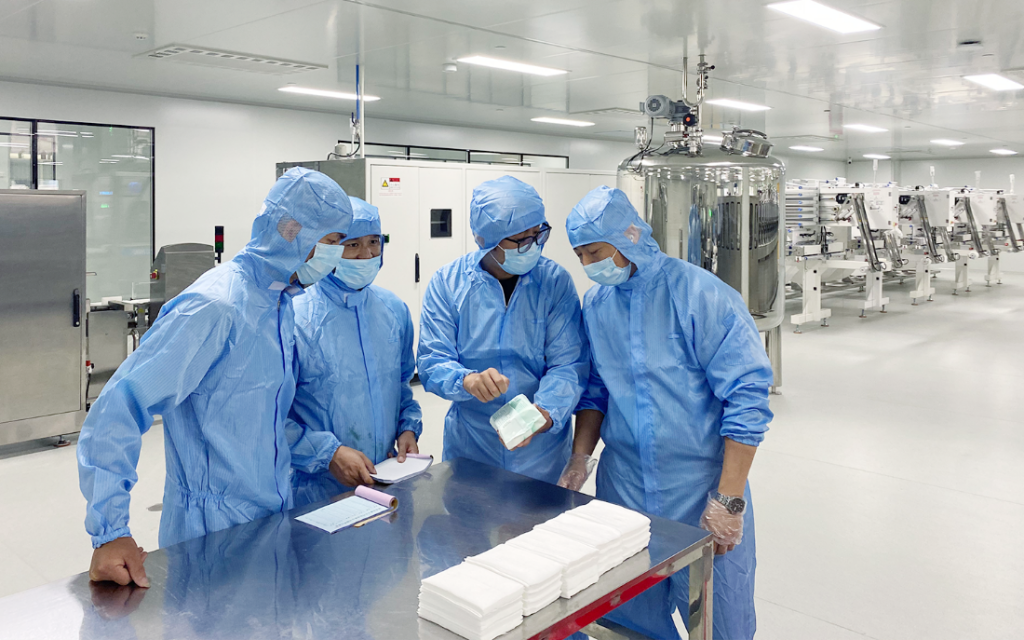
My aim in this piece is simple: map the real, often-hidden causes that make wet wipes lines fragile and point to choices that actually change yield and uptime. We’ll move from what fails today into what can work tomorrow — step by step.
Where Traditional Systems Fail: Hidden Flaws in Wet Wipes Production
wet wipes production often looks straightforward from the outside, but the truth is messier. I’ve audited lines where the machine layout, control architecture, and maintenance plan were all designed decades ago. Those setups leaned on manual adjustments, under-specified power converters, and legacy PLC code. Over time, tolerance drift and minor operator workarounds become standard practice — and then a single component fault brings the line down.
Why does this happen?
The root is usually design-by-default. Teams accept variability because “that’s how it’s always been done.” Look, it’s simpler than you think: ultrasonic cutting misalignment will create ragged edges; poorly tuned dosing pump cycles make moisture inconsistent; and inadequate tension control will cause wrinkles at high speed. Each symptom has a clear mechanical or control origin. When servo motors are undersized or the PLC scan is overloaded, the system can’t recover dynamically. I’ve seen scrap rates climb while managers hunt for solutions in training manuals — not the control loop.
Technically, the flaw often sits between mechanical design and control logic. For example, a stepper-driven feed may perform well at low speed but adds micro-slip at higher rates. That slip shows up as loose folds or uneven wetting downstream. Fixing it means a systems approach: re-evaluate actuation (servo vs. stepper), verify power converters and transient protection, clean up PLC routines, and standardize operator adjustments. The payoff is measurable: less scrap, fewer jams, and a calmer shift crew.
Future Outlook: Practical Paths and New Principles for Better Lines
Looking ahead, I focus on two things: which principles actually reduce downtime, and which features offer real ROI. In modern wet wipes production, predictable uptime comes from tighter integration between sensors, control, and mechanics. I prefer a modular approach — standardized servo modules, local diagnostics, and clearer human–machine interfaces (HMI). That reduces mean time to repair and simplifies spare parts planning. It also shortens training time for operators.
What’s Next?
On the technology side, we’re seeing practical gains from condition monitoring and smarter control loops. For example, adding a simple vibration sensor to a folding drum detects imbalance before a jam. Pair that with better HMI alarms and you avoid an hour-long teardown. Case studies show lines that adopt targeted monitoring and periodic PLC code reviews gain 8–12% more effective output within months — no need to replace the entire line. — funny how that works, right?
From my experience advising plants, the best path mixes small tech upgrades with process discipline. Start by listing repeat failures, then match each to a single corrective: replace underpowered actuators, tune the dosing pump timing, install tension control with feedback, and update the PLC scan priorities. These changes are practical and verifiable. I like to run before/after trials and measure throughput, scrap, and mean time between failures. The results speak plainly.
Closing: How to Evaluate Upgrades (Three Practical Metrics)
I’ll finish with an actionable checklist I use when advising teams. When you evaluate machines or upgrades, focus on these three metrics: 1) Effective throughput at target speed (not just nameplate rpm), 2) Mean time to recover (how long to restart after a fault), and 3) Spare-part commonality (can you swap modules quickly?). These metrics reveal the real cost of choices and make procurement discussions simpler. They also force you to compare apples to apples.
We should be pragmatic: pick the fixes that narrow failure modes rather than chasing exotic tech. If you want a partner who’ll run those trials with you — honestly, with real measurement and no fluff — I’m happy to help. Best practices matter, and small, well-targeted changes deliver big returns.






