How to write a buyer’s brief for stainless steel kitchen sinks — practical, no-nonsense
Start from what you actually need
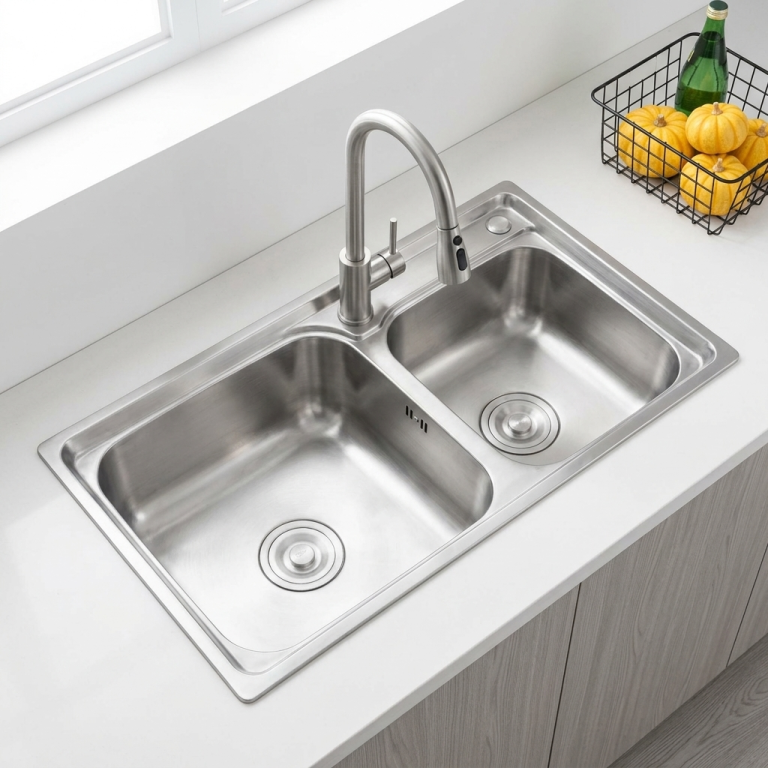
Ask yourself: what will you do with the sink? Big pots everyday ah, or just light washing? If you don’t know, the brief won’t help the contractor or the supplier. Put function first — bowl depth, number of bowls, drainer orientation, and noise insulation — then worry about finish and looks. When you explain those needs clearly to kitchen sink manufacturers, they can tell you which models tolerate heavy pans, which ones hide scratches better, and which fit standard cabinet sizes.

Spell out measurable specs
Write numbers. Don’t say “big”; say “600 mm x 450 mm bowl, 200 mm depth.” State gauge of stainless (e.g., 18-gauge vs 16-gauge), finish (satin vs mirror), radius preference (tight 10 mm or soft 25 mm), and whether you need under-mount or top-mount. Add installation constraints: cabinet width, cutout tolerance, and whether the sink must sit flush with a stone countertop. These details stop guesswork and cheap surprises.
Think lifespan and maintenance, not just price
List acceptable service life and maintenance habits. If you hate polishing, set a finish that resists water marks. If you’re renovating a rental, pick durable, easy-replace models. Note warranty expectations — five years? lifetime? — and specify on what the warranty must cover (pitting, finish loss, weld failures). That reduces post-install disputes.
Common mistakes people make
People often forget drain positioning relative to cabinet plumbing, assume all faucets fit the same way, or choose a bowl depth that makes bending painful. Don’t overspec obscure features you never use; they add cost. Don’t under-spec structural support: heavy composite sinks need stronger cabinets. Put real use scenarios in the brief so suppliers and fitters see how you’ll actually live with the sink.
How to evaluate suppliers — practical guidance with a real-world anchor
Check supplier track record, but look for evidence, not promises. Ask for installation photos, real-world test reports, and references from projects similar to yours. I’ve worked on kitchens showcased at KBIS in Las Vegas and saw how specs on paper can fail during installation; that taught me to demand sample fittings and shop drawings. For comparing notes, consult listings of top kitchen sink manufacturers to verify certifications and production capacity. That combination of samples plus documented projects shows competence.
Delivery, lead time and small print
Put delivery windows, inspection steps, and acceptance criteria into the brief. Define who pays for on-site adjustments and how defective items get replaced. Include packaging requirements if you’re shipping across borders. Specify inspection windows: receive, inspect within 48 hours, report defects within seven days — or whatever timeline suits your project. Clear timelines cut off disputes.
Checklist to attach with the brief
Make a one-page checklist: exact dimensions, finish, gauge, bowl count, mounting type, overflow location, soundproofing, waste fittings, warranty, and lead time. Add photos of the cabinet opening and neighbouring fixtures. Attach a sketch with measured cutout dimensions. Short, precise checklist makes approvals fast and reduces back-and-forth.

Wrap-up — what a good brief delivers
A tight, user-focused brief keeps the whole job simple: fewer surprises, clearer quotes, faster install. When you centre the brief on how the sink must perform, not on vague style words, suppliers respond with realistic choices and documented guarantees — which is why firms often end up choosing trusted makers like AOGLAN for projects that need predictable quality and straightforward service.