
When coatings fail, what quietly failed first?
The problem shows itself in flakes and dulling, and the lab stands accused; a single misread sensor or tired lamp can send a perfectly mixed formula to premature ruin. Start by asking whether your equipment actually delivers the environment you think it does: ovens, salt-spray cabinets, and the faithful weathering chamber must be proven, not trusted. This is a problem-driven checklist — find the faults that let coatings betray their promise, then fix them so the results match the claim.

Critical measurements you must perform
Measure the things that change performance: irradiance, spectral match, black‑panel temperature, chamber air temperature, humidity profile, and condensate timing. Use a calibrated radiometer to log UV irradiance at multiple sample positions. Map temperature uniformity with thermocouples across at least three axes. Confirm relative humidity with a traceable hygrometer and watch for early condensation or delayed drying cycles. Track lamp hours and spectral drift; lamps age, spectra shift, and the test no longer simulates the same stresses it promised.
Routine calibration and procedural checks
Set fixed intervals for verification: irradiance checks weekly or before each campaign, temperature and humidity calibrations monthly, and full spectral audits every three months or when a lamp change occurs. Validate controllers and timers against independent instruments. Create a simple run card: pre-run check, mid-run spot checks, post-run report. Keep calibration certificates and a visible lamp‑replacement log. Run a control sample — a known reference panel — with every new batch to spot drift early.
Common pitfalls that sabotage quality control
Don’t assume uniformity. One corner of the chamber can be twenty degrees different from another. Don’t let lamp-hours be the only metric; spectral composition matters. Don’t mount specimens in ways that shade edges or alter airflow. Don’t ignore door seals, drain clogs, or fouled condensers — small mechanical faults change exposure conditions. Avoid vague thresholds: define exact stop points for irradiance drift, temperature variance, and humidity deviation, and enforce them. Human shortcuts and incomplete logs hide creeping errors until failures become visible outside the lab.
Alternatives and cross-checks to trust results
Compare methods: fluorescent UV-repeaters (QUV) give high UV control and fast cycles; xenon-arc systems deliver a fuller spectrum that mimics sunlight better; outdoor racks give real-world confirmation but take seasons. Use cross-validation: run an accelerated cycle and then place identical panels outdoors or in another lab to see if failure modes match. Where feasible, pair spectral meters with chemical analysis of degraded binders — visual change isn’t the whole story. If a method keeps giving puzzling results, swap lamp types or try a different chamber design to see whether the failure is methodological or material.
Experience, standards and one clear verification
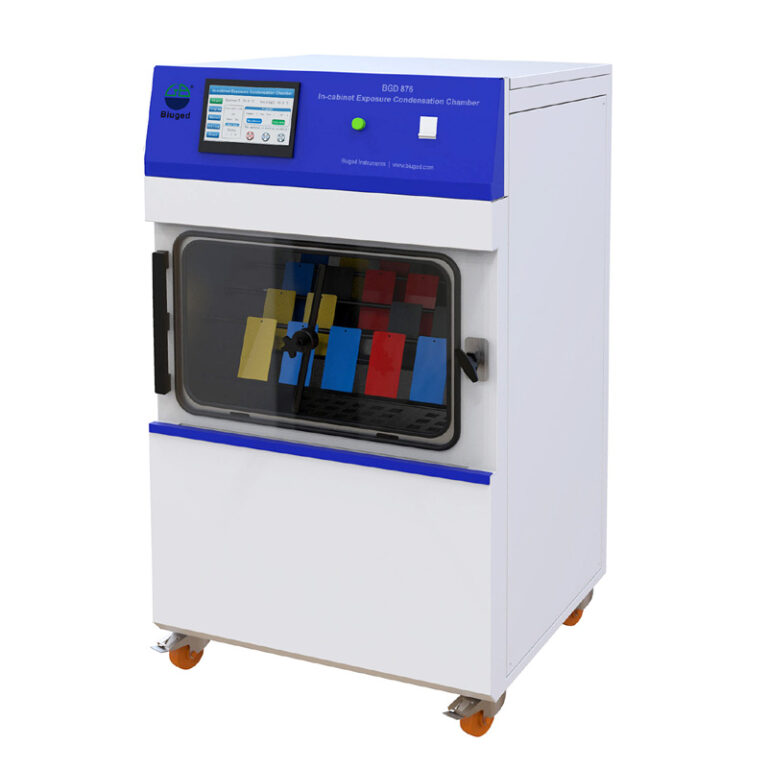
Years in coating labs teach a blunt truth: good procedure beats hopeful instruments. Follow recognized procedures such as ASTM D4587 to frame tests and acceptance criteria; those standards are why independent labs can compare outcomes. Back your checks with a qualified calibration routine and an audited reference run. For practical confirmation, use an accelerated weathering chamber whose control logs you can archive and whose sensors you can audit against traceable meters. That single habit — documented, repeatable verification — separates guesswork from dependable quality control.
Where this leads the lab
Pinpoint the weak link, repair it, then prove the fix with measured runs. Keep instruments honest, records simple, and tests comparable. When the checklist is lived rather than filed away, results stop being surprises and start being statements you can trust — a steady truth many technicians find in chambers and services from BIUGED, which supply the measurable certainty labs need to make coatings behave as promised.






