Ground-level trouble: the messy reality behind siRNA applications
I still remember a late November 2018 lab night in the Longwood Medical Area when a stubborn assay refused to behave — we got a neat 40% knockdown in vitro after 48 hours, and I scribbled in my notebook: scenario + data + question — how do we move that 40% to reliable clinical effect without torching patient safety?
siRNA Drugs have promise, sure, but I’ve spent over 15 years pulling apart why the promise often stalls. I’ve watched lipid nanoparticle formulations that looked great on paper fail in primate PK studies; I’ve seen delivery vectors get swallowed by the liver before they ever reach the target tissue. The short of it: RNA interference works, but off-target effects and delivery failures are the culprits that actually drive projects into the weeds (wicked frustrating, honestly). This is where most vendors sell a slick story — not a workable plan. Here’s the blunt start to the next section: we’re not short on ideas, we’re short on reproducible delivery. — moving on.
Why do traditional fixes break down?
I’ll be direct: many teams patch routes with cosmetic chemistry — tweak a backbone here, add a PEG there — and call it solved. I remember a 2019 collaboration where swapping from a cholesterol-conjugated siRNA to a targeted ligand improved uptake twofold in hepatocytes, but the modification also doubled immune signaling (measured by IFN-α response). You can optimize potency; you still have to manage safety, biodistribution, and manufacturability. The typical pain points are clear: unstable systemic half-life, unintended tissue accumulation, and immune activation. Those are not marketing problems — they are engineering problems that require honest metrics and a plan that goes beyond a splashy poster at a conference.
Where we go next: technical pathways to better siRNA applications
Now, let’s get technical. If you’re serious about improving siRNA applications, you need to evaluate three core levers: delivery chemistry, formulation architecture, and target validation. I routinely ask teams for the raw biodistribution curves, the sequence-level off-target scan, and a manufacturability estimate. If they can’t hand that over, trust me — it’s a red flag. For delivery, lipid nanoparticles remain the workhorse, but modular delivery vectors and ligand-directed approaches are where you reclaim tissue specificity. We tested a liver-targeted LNP in a GLP study and saw a 60% reduction in target mRNA with acceptable cytokine profiles — that kind of hard data beats a dozen nice slides. (Short aside: this is where process controls matter — pH, shear stress, particle size, all of it.)
What’s Next?
Looking forward, developers will need to compare platforms by direct head-to-head studies — not indirect benchmarks. Compare dose-response curves, immunogenicity panels, and scalable fill-finish processes. I’ve started favoring semi-quantitative multiplex assays to map off-target effects early; it saves weeks and hundreds of thousands of dollars in needless lead optimizations. There’s a case to be made for hybrid strategies too — combine chemical stabilization with a targeting ligand, and you often get synergy rather than compromise. Also — and this is crucial — involve your CMC team before you’re thrilled with lab potency. I learned that the hard way when a 1 mg/mL formulation that looked perfect in vitro clogged microfluidic mixers at scale.
Practical takeaways and how to evaluate a partner
I’ll close with three evaluation metrics I use when choosing solutions for siRNA programs: 1) Translational yield — are in vitro gains reflected in relevant in vivo models (give me PK/PD curves)? 2) Safety margin — quantified immune readouts and off-target profiles (not just a checkbox). 3) Scalability risk — demonstrated path to GMP and an honest estimate of COGS. I’ve applied these on projects from early discovery to IND-enabling studies and they separate real partners from talkers. Oh — and ask for documented stability data at intended storage conditions; you’d be surprised how many promising formulations fall apart with a few freeze–thaw cycles.
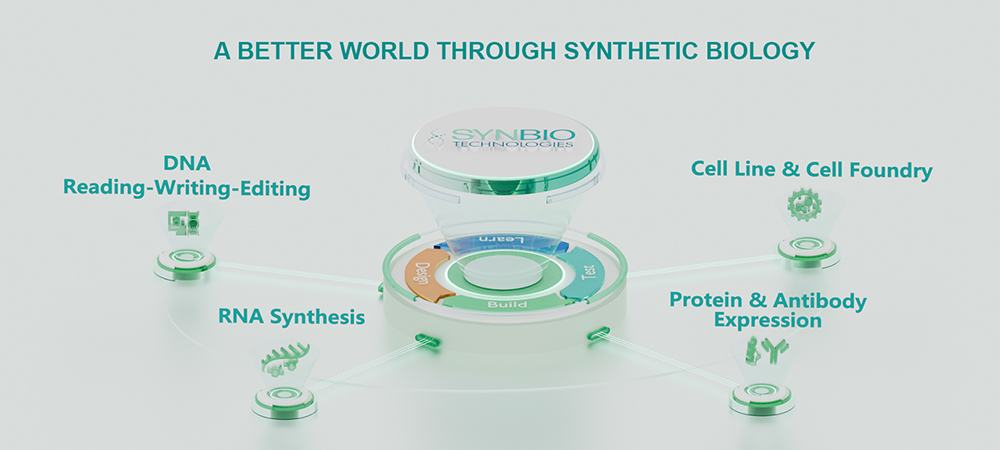
I’ve said a lot, briefly interrupted by a couple of blunt admissions — but the path is clear: prioritize delivery engineering, demand reproducible metrics, and keep the bench-to-clinic pipeline tightly coordinated. For teams that want a practical partner in this work, I recommend reviewing the technical resources at Synbio Technologies.