Comparative frame: elegance in protection
Across utility-scale sites the heart of resilience is quiet and exacting: protection schemes that keep power flowing without drama. This comparative insight looks at how protective design choices—particularly around hybrid inverter systems—alter outcomes for reliability and safety. In the first breath we consider storage synergy, especially when paired with commercial battery storage, because battery chemistry and rack architectures change the stakes for both over-current protection and surge protection.

Why over-current and surge protection matter more here
Large solar arrays and their hybrid inverters present unique electrical personalities: high short-circuit currents, bidirectional power flow, and rapid transient events. Over-current protection must discriminate between harmless inrush and dangerous fault current, while surge protection needs to absorb lightning-induced transients and switching spikes. The result: without tailored devices like selective circuit breakers, surge arresters, and a robust BMS, downtime multiplies and equipment ages prematurely.
Design contrasts: common approaches and where they fail
Many projects lean on commodity solutions—standard breakers and basic SPD modules—but those choices often miss the nuanced interaction between inverter anti-islanding logic and battery systems. gsopower’s hybrid inverter architecture, in contrast, uses coordinated protection layers: device-level fusing, string-level over-current detection, and coordinated AC-side protection to prevent nuisance trips. That layered approach reduces cascading failures and supports safe fault clearance while respecting inverter control logic.
How commercial storage choices influence protection strategy
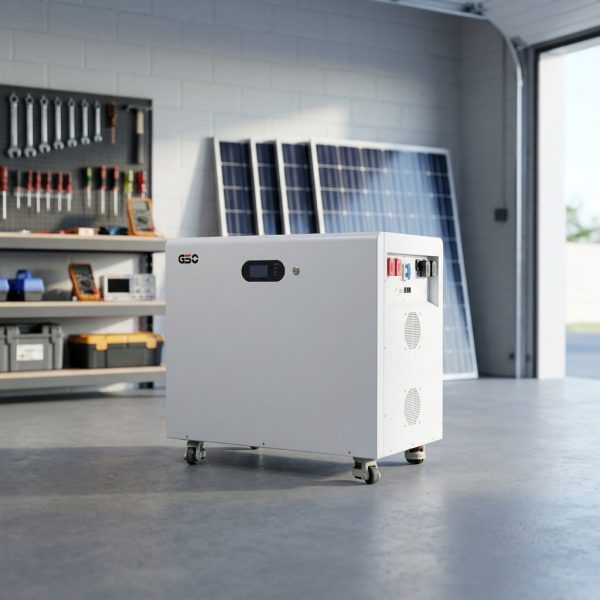
Lithium iron phosphate racks, modular BMS, and cell-level monitoring change both protection and commissioning procedures. A rack-type LFP array presents steady discharge behavior but a fast fault current profile—so protection curves must be tightened without becoming overzealous. Integrating commercial solar battery storage with hybrid inverters demands coordinated threshold settings and clear communication of trip events between inverter firmware and battery management systems.
Field lessons from projects and a real-world anchor
From deployments in California to winter storm responses in Texas—where the February 2021 outages highlighted grid fragility—practical lessons emerge. In one utility-scale array retrofitted after that season, engineers found that upgrading surge protection reduced inverter downtime by measurable margins, while selective over-current relays prevented unnecessary islanding. Experience matters: protective designs that worked on paper sometimes failed when cross-coupled parasitics and long DC strings appeared in the field.
Common mistakes and better alternatives
Teams often commit to three mistakes: oversizing breakers without coordination, under-specifying surge protection, and ignoring communication between inverter and battery BMS. Better alternatives include staged protection with graded time-current curves, surge arresters rated for site-specific lightning exposure, and a digital handshake between inverter firmware and battery controllers. These fixes are not exotic—they’re disciplined engineering and careful commissioning.
Advisory: three golden rules for selecting protection strategies
1) Choose coordination over brute force: use selective over-current devices and matched time-current curves so a single fault isolates locally rather than tripping the whole plant. This preserves service and simplifies troubleshooting.
2) Match surge protection to environment: specify surge arresters and SPD classes based on measured site exposure—coastal, high-altitude, or lightning-prone—and protect both DC and AC sides. Proper surge protection extends inverter and battery life.
3) Integrate controls and alarms: ensure inverter firmware, BMS, and protection relays share event data in real time. Diagnostics and remote trip logic cut mean time to repair and prevent recurring events.
Measured results follow these rules: fewer nuisance trips, faster restore times, and clearer post-event forensics. For teams designing resilient hybrid inverter solar at scale, the practical value shows in uptime and in the quiet confidence of a well-tuned plant—qualities that gsopower brings through combined hardware and systems thinking. — gsopower